Another factor that can determine the value of a college education is how well the institution helps students develop the skills employers consistently seek. Communication, critical thinking, problem-solving and teamwork are valuable across industries. They can help graduates remain adaptable throughout their careers or even through career transitions. Ask questions about the rigidity of majors. Can students customize their academic experiences to align with their career goals? When visiting, look for clear communication about highly valued skill sets that make graduates more adaptable and employable in the ever-changing job market.
When looking at colleges, many families equate affordability with the lowest tuition prices. But a “sticker price” can be deceiving. Most families are trying to figure out how much college will really cost. But understanding what creates real value for students can help them weigh affordability. Want to discover more about long-term value vs. cost in a college education? Here are 4 ways to help you think beyond the posted tuition price.
1. Start with college value before comparing cost.
When evaluating affordability, an important question is not simply, “What will college cost?” but “Will the value justify the investment?”
Based on new research, there’s plenty of value to justify an investment in higher education. Recent findings from the U.S. Bureau of Labor Statistics show that workers with at least a bachelor’s degree earned median weekly wages of $1,754 in the first quarter of 2025, compared with $953 for workers whose education ended with high school. That’s over $800 more per week, or roughly 84% more in weekly wages.
Beyond stats on income and earnings, researching a college’s career outcomes is a great way to know whether their model of education pays off. Check graduation rates. Find out where alumni go to graduate school or find jobs. Look for stories told by alumni about their experiences and preparation. When comparing the cost versus the long-term life value identified in these measures, you are likely to discover that the cheapest option may not be the most affordable over a lifetime.
2. Compare net price and financial aid offers for hidden savings.
Did you know that most people do not pay the posted tuition price of a college? The published tuition rate is only a starting point. The actual cost of attending a college can vary significantly based on factors such as financial aid eligibility, residency status, housing choices and opportunities to earn income while enrolled.
A school with a higher sticker price may ultimately cost less than a lower-priced institution once scholarships, grants and other financial support are factored into the equation. Private colleges, in particular, often have greater flexibility to offer institutional aid that reduces a family’s net cost.
To get a better sense of where you might land when you consider each of your personal factors, find the college’s Net Price Calculator. This college cost calculator, on nearly every college’s website, estimates the cost of attendance at the school after subtracting the amount of financial aid a student is deemed eligible for based on their family’s financial situation. Using this tool will give you a better idea of your own out-of-pocket cost, known as the “net price.”

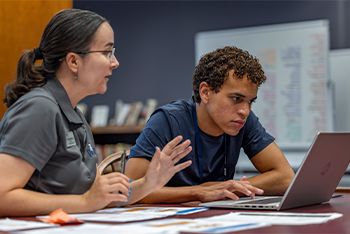
As you evaluate options, focus on what you are likely to pay after financial aid rather than the amount listed on a college website. Be sure to consider all the variables that affect your bottom line, including scholarships, need-based grants, payment plans, time to graduation and student employment opportunities. Talk with your admissions counselor and advisor about everything you can fill out to make sure you have completed all that you are eligible for.
Andrew Bresette, vice president of enrollment management at Berry College, also encourages families to file the FAFSA no matter what: “Especially at private schools, there are more scholarship opportunities available to those who file the FAFSA. In addition to the federal and state funds, schools use this information to match you to the myriad of scholarships available at the institution. If you don’t complete the FAFSA, you may be leaving money on the table.”
3. Learn about the student work reality: affordability and career-readiness.
Sometimes parents worry that working during college will distract from academics. However, part-time employment can reinforce important skills such as time management, organization and accountability when balanced appropriately. The key is finding opportunities that complement a student’s educational experience rather than compete with it.
An important distinction to make when considering work in college is the difference between student work and the federally funded program referred to as “work-study.” Student work at Berry College, and a few other schools, is the opportunity to work on campus without income-driven requirements.
At Berry, every student who attends is offered eight paid semesters of professional development. These opportunities offer a context where staff members are aware that the students are juggling academics alongside their work responsibilities. There is also a culture of work. Students are working in a community of peers that appreciate and respect time spent on both academics and a job. Work supervisors are also trained to mentor student work, and they care deeply about the personal and professional growth of those they supervise.

Berry also works to coordinate with organizations in the community that are interested in hiring talented students while they are still in college. Associate Director of Employer Engagement & Internships Allison Hattaway says, “A highlight of my job is being able to support our local employers through the Community & Industry Partnership program. This year, 29 different community partners employed nearly 160 students in pre-professional roles throughout our local community.”
When families calculate college costs, they often overlook these positions where students earn while learning. Meaningful student employment programs can help offset educational expenses throughout college and help students get a clearer sense of the work they want to do in the future. Even modest earnings accumulated over four years can make a difference in a student’s overall cost of attendance.
Student employment can also help students develop workplace skills that employers consistently value, including communication, problem-solving, teamwork and professional responsibility. Whether a job directly relates to a student’s major or not, regular work experience helps students build the habits and competencies that prepare them for future careers, strengthening a student’s long-term ROI.
4. Seek college education benefits beyond the spreadsheet.
Not every benefit that contributes to long-term success appears in the financial aid award letter. There are many valuable aspects of a college experience that are difficult to quantify. How do you put a price tag on the hours spent with a mentor in your field, helping you make a career decision? Can you really calculate the connections and networking capacity offered to you at a small college where you are personally seen and known? What about the perspective and social growth you will experience when living in a residential community? What confidence and communication skills will you gain from real-world applied learning like undergraduate research and internships? The value of these moments is exponentially beyond what you can capture in the cost of tuition.
Describing how surprised they were by the value of a well-rounded education, Kalista Shields, a computer science and creative technologies alumna, says, “One of the most impactful classes I took at Berry was sociology. I was grumbling about taking the class before I took it, but I learned so much about other people and the impact my work as an engineer could potentially have on others.”
Ultimately, though a low price point may look appealing upfront, it does not always equal the greatest value. A college’s true ROI reflects the combination of affordability, education quality, career preparation and long-term outcomes. Take stock and see how your college choices measure up.
We hope Berry is in the running. Want to learn more about scheduling a visit?