News & Stories
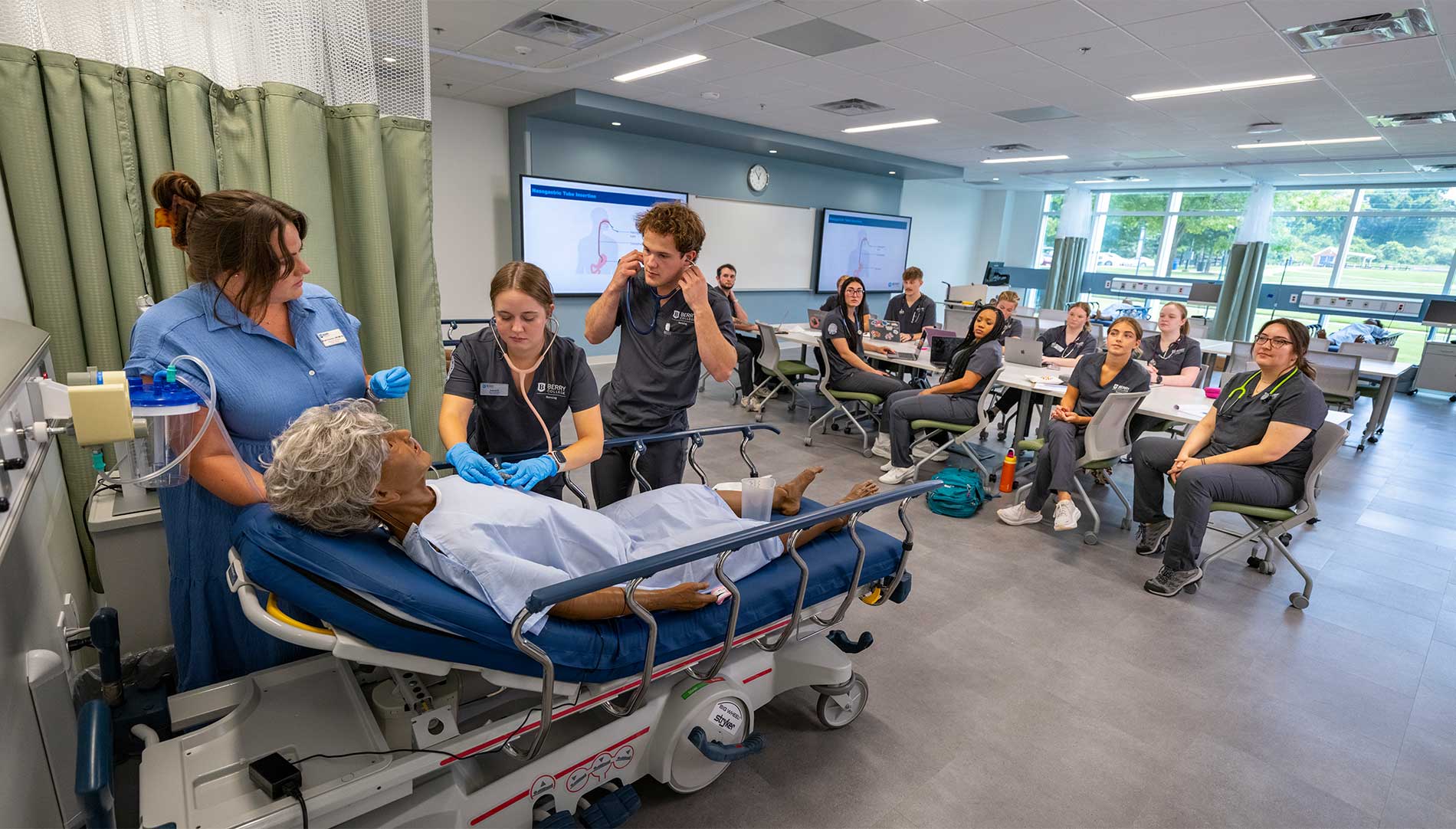
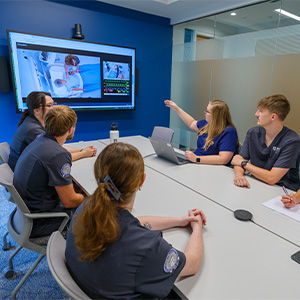
Class of nurses observing a live patient care simulation
January 29, 2026

Why Simulation Builds Better Nurses

From an early age, many children are taught to see nurses as heroes without capes. They are smiling faces and thoughtful caregivers in some of life’s darkest moments. In reality, nurses are real people facing a meaningful yet demanding profession. Recent national nursing surveys show nearly three out of four nurses report feeling emotionally exhausted multiple times a week. More than half of the nurses surveyed reported seriously considering leaving the profession repeatedly over the past six months.

Today, nurse preparation must extend beyond technical skills. Now, nursing programs across higher education are rethinking how to equip future nurses for a field where confidence, clinical judgment and emotional resilience are just as essential as clinical expertise. Reflecting on the state of nursing and nursing education, programs with robust simulation experiences are emerging as the strongest path toward producing resilient nurses. Not only are nurses with significant simulation experience clinically competent, but they are also prepared for the realities of patient care.

Interested in a nursing career? Here are the top reasons higher education experts argue simulation is a powerful educational tool for training resilient nurses and for protecting the future of the nursing profession.

What is a simulation program?

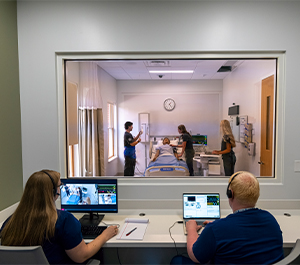
Nursing simulation laboratories or labs are designed to provide nursing students with hands-on clinical experiences, providing realistic scenarios where students encounter patients with symptoms and conditions common in a traditional clinical setting. Emulating real-life situations, students have the opportunity to enhance their nursing skills, teamwork, interdisciplinary communication, critical thinking and clinical judgment. Their experiences also include the use of current medical technology in health care settings.

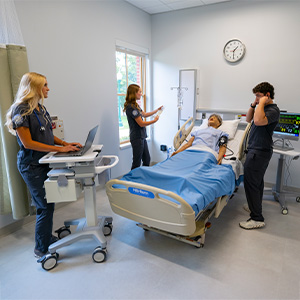
Unlike traditional clinical settings, simulations have adjacent control rooms for observation and recording. Instructors use the footage from simulations as a teaching tool for reflection and discussion during debriefing sessions.

${_EscapeTool.xml($imgAlt)}

What makes the student simulation experience so powerful?


1. Simulation creates a safe space to fail.

In a clinical environment, students understandably fear making mistakes. As a novice, it can be difficult to try out skills or trust yourself when someone’s well-being is at stake. But nursing faculty emphasized repeatedly that simulation isn’t just a fancy mannequin in a room. In this structured learning environment, the fear somewhat eases for students. Faculty design scenarios where students can practice, experiment, reflect and learn without risking harm to a real patient.

Explaining the freedom of simulation, Clinical Nursing Instructor Wendy Greer says, “Simulation gives students a safe physical and psychological space to act as nurses without risking harm. They can combine everything they’ve learned and make mistakes that won’t lead to negative outcomes.”

${_EscapeTool.xml($imgAlt)}

This safe‑to‑fail model gives students courage, and the debriefing session, where students watch video of themselves and discuss their decisions with their teacher and peers, can have the most powerful impact. This secondary space gives students the chance to reflect honestly, regulate emotions and build professional judgment.

“Many students think the learning happens in the hands‑on moments with the mannequin, but the research shows the learning actually happens in the debrief,” says Clinical Nursing Instructor Natalie Tracy.

2. Strong simulation programs prioritize emotional resilience.

The nursing profession is emotionally, physically and psychologically demanding. As hospitals increasingly seek graduates who can manage stress, self-regulate and support patients through challenging moments, institutions of higher ed with intentional simulation programs know this and specifically design opportunities for students to practice processing emotional reactions to situations they might encounter in the real world.

Tracy emphasizes how important it is for nursing students to have space to practice regulation “I care far more about a student’s well-being than whether they’re perfect at an IV start,” she says. “A healthy nurse is going to be a safer nurse. We want our students to be able to debrief themselves once they graduate.”

${_EscapeTool.xml($imgAlt)}

In the debrief, students identify their emotions, discuss moments of overwhelm and analyze internal reactions as much as clinical decisions. These habits prepare them for the very real emotional triggers they will face in the field.

3. Simulation offers richer, more concentrated learning than traditional clinical hours.

While traditional clinical rotations are invaluable, they can depend on unpredictable patient assignments and hospital flow. Simulation offers rich, concentrated learning that complements traditional clinical hours. And because student learning is so concentrated in simulation experiences, many states and organizations count simulation hours differently.

As Greer explains, “Clinical hours are one‑to‑one. Each hour spent in clinicals is credited as one hour. Simulation is such a rich learning experience, however, that an hour spent in simulation is two hours of credit because the learning is so much more concentrated.”

In other words, students in simulation‑rich nursing programs also graduate with significantly more meaningful practice time and experience, leading to stronger clinical confidence for the future.

One of the key components to concentrated learning is video replay. Faculty repeatedly highlighted the value of seeing oneself on video. “Watching themselves helps students reframe their performance. What may have felt like a failure often wasn’t as bad as they imagined,” says Greer.

${_EscapeTool.xml($imgAlt)}

4. Simulation creates space for application.

Simulation is a unique learning environment where faculty can build scenarios that align with what students are studying in class, making the concepts come to life. But simulation offers more than a traditional lab approach.

“We try very hard not to give students anything in simulation that they haven’t learned yet,” says Tracy. “The design is intentional, aligned and prepares our students for real practice.”

And because students participate in teams, simulation mirrors the collaborative nature of the health care system they will navigate after graduation. Observers watch live feeds, take notes and contribute to debriefs, reinforcing communication strategies and group responsibility.

${_EscapeTool.xml($imgAlt)}

5. Simulation improves the reputation and employability of graduates.

Today, hospitals increasingly recognize that not all nursing programs prepare students equally. Graduates from simulation‑rich programs often arrive more confident, competent and emotionally prepared for the pace of clinical work.

At Berry, nursing faculty have received feedback directly from employers, saying, “There’s a certain mentality that comes from programs like Berry. Students are reflective and well‑prepared. They step on the floor ready to care for the whole patient.”

Experiential learning: A key component for the future of nursing

If you are searching for a degree program that prepares nurses for long, meaningful careers where they thrive, not just survive, then look no further than programs with high-quality simulation-based learning. Research agrees that simulation is not a supplement to nursing education; it is rapidly becoming the backbone of strong programs.

A systematic review of simulation education was recently published in The International Journal of Advanced Research in Nursing reporting that the practice improved clinical competency, confidence and critical thinking in nursing students. Likewise, the International Journal of Mental Health Nursing published a piece showing that ARARTI simulation-based education reduced emotional exhaustion and cynicism in nurses.

In other words, simulation prepares nurses for both the technical and human demands of modern health care. For students who want an education that prepares them for the science and the soul of nursing, simulation‑rich programs are a game changer.

Want to learn more about simulation and nursing at Berry College? Check out the nursing program pages here, reach out to an admissions counselor or come for a visit!


 Back to Top