
STORY BY DAWN TOLBERT
Photography by Brant Sanderlin
Dr. Katie Edenfield Price (07C) vividly remembers the fear and uncertainty she felt as a 17-year-old high school senior sitting in a Savannah, Georgia, hospital room, watching helplessly as her mother struggled with symptoms that baffled doctors and nurses.
The family had traveled from their home in nearby Statesboro seeking answers for unexplained weight loss, nausea and constant headaches. Extensive tests were performed over the course of six months as her mother grew ever weaker, but clarity proved elusive.
Leaning into knowledge gained in the Advanced Placement biology course she had aced the year before, Price processed the flood of information flowing from the care team and helped her parents to understand it as well. Taking note of the teen’s keen interest in the science behind the symptoms, endocrinologist Dr. Joseph W. Dehaven went to great lengths to explain what was eventually diagnosed as a rare infection of the adrenal glands.
“It’s funny in hindsight, but Dr. Dehaven thought I was a college student,” Price recalled. “His willingness to actually sit at the bedside and explain things went a really long way to shaping my life.”
Two decades later, her mother’s illness and recovery inspired a paper written by Price for publication in a medical journal chronicling one of the longest documented survivals of that particular infection. Yet behind the clinical analysis was a transformative experience that helped guide her career path as a doctor and educator.
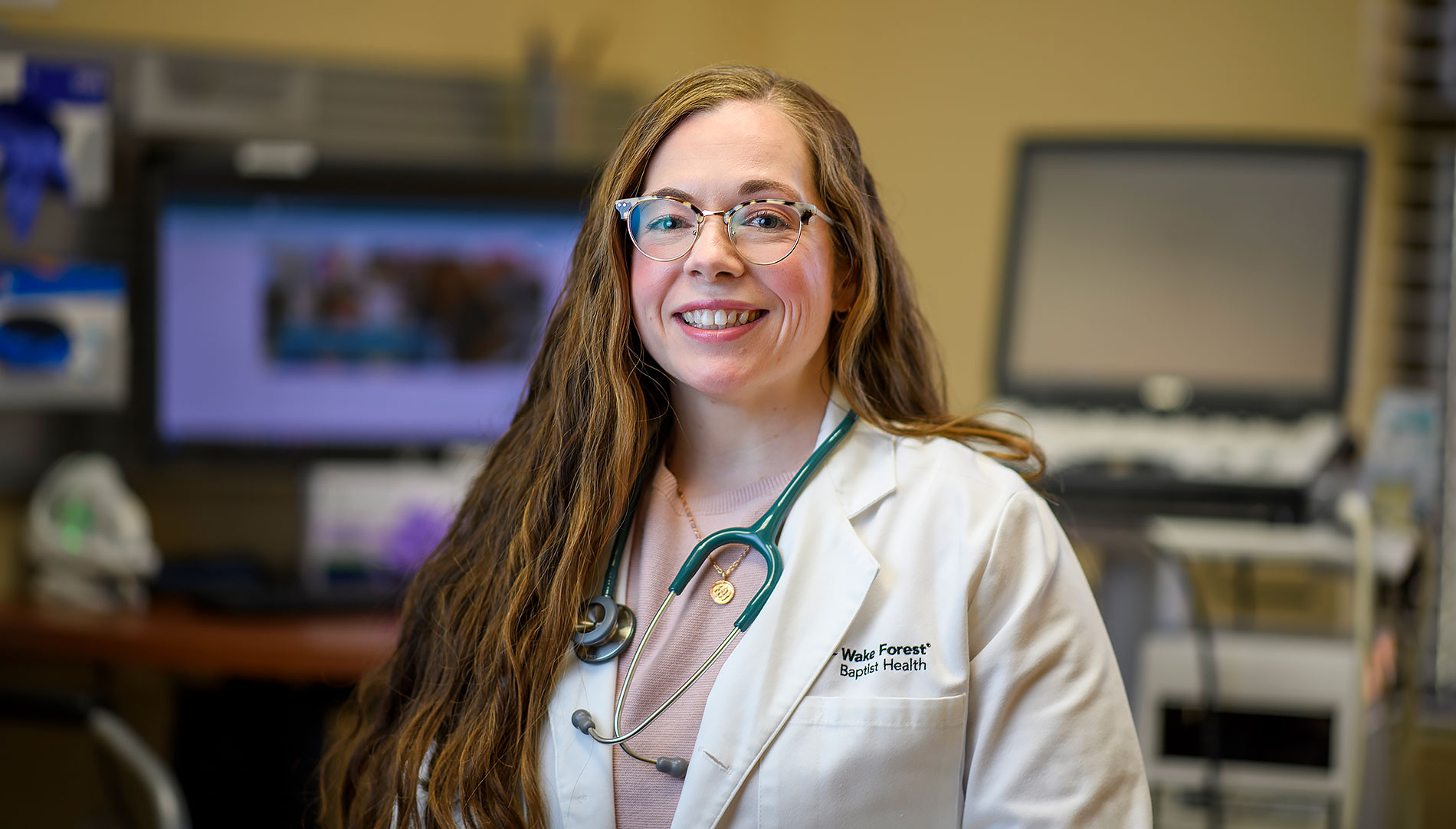
Today, Price is an academic physician at Wake Forest University School of Medicine in Winston-Salem, North Carolina, where she is a trusted voice for families and medical students struggling to navigate complex health situations.
“I’d always liked teaching others,” she emphasized. “Now I get to do that and help take care of people at the same time.”
Healing in practice
Price’s current workload includes a unique blend of patient care, research and instruction rooted in the medical training she received at Mercer University School of Medicine and subsequent experience gained during three years of residency, one year as chief resident and two years as an endocrinology fellow, all at Wake Forest.
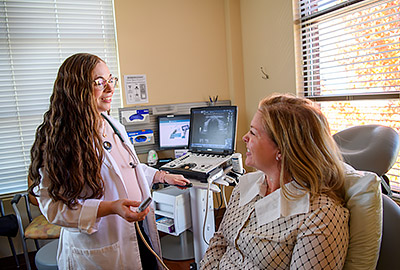
Patient care comprises 70% of Price’s time, which is much to her liking. The practicing endocrinologist focuses on hormone disorders linked to glandular dysfunction, most commonly treating diabetes and thyroid disease but also managing other conditions like osteoporosis. Her clinical expertise includes thyroid ultrasounds and biopsies.
“To me, endocrinology is the best specialty ever,” she enthused. “We get so much great continuity of care with our patients but also are able to focus on a little more narrow range of issues compared to what I would have been doing had I pursued primary care.”
When not seeing to her own patients, Price is responsible for overseeing inpatient glycemic management as a medical director at Atrium Health Wake Forest Baptist Medical Center, in addition to conducting academic research focused on diabetes technology. Recently, she published findings suggesting that the use of continuous glucose monitors in both inpatient settings and during the administration of anesthesia could lead to much earlier detection of dangerous drops in blood sugar levels than traditional methods like intermittent fingerstick blood glucose testing.
As a faculty member at Wake Forest University School of Medicine, Price helps medical school students, residents and endocrinology fellows develop standards of care by sharing insights shaped by her own rigorous training and personal experience. She relishes the mentoring aspect of her teaching role, describing it as “living out Berry’s head, heart and hands motto basically every single day.”
Family ties
Price’s heart for patient-centered care began in her mother’s hospital room and deepened at the close of her year as chief resident when she learned her brother had acute leukemia. Pausing in the middle of her fellowship, she again found herself bedside as a caregiver. She proudly reports that “he is off the chemo train” after years of treatment, including a bone marrow transplant for which she was the donor just 10 weeks after giving birth to her second daughter.
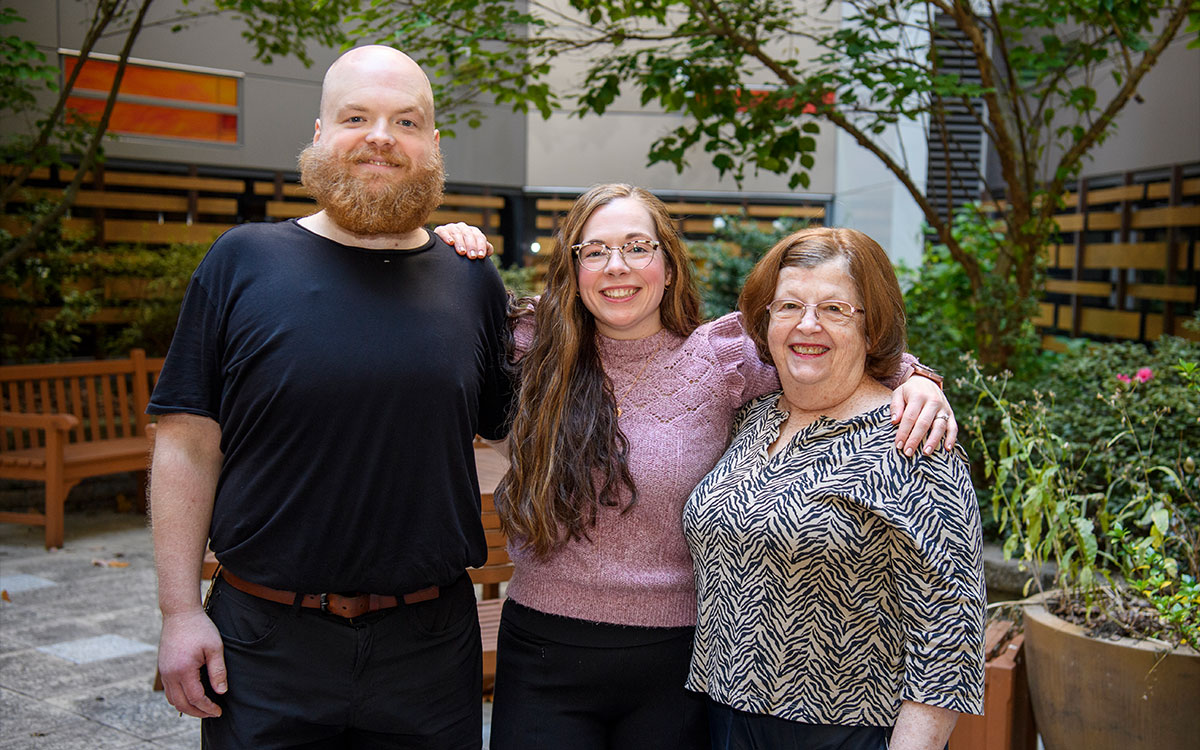 Price with brother Patrick and mother Cathy.
“I only have one brother, and when he was diagnosed, I knew I could not just fix my face and go back to work,” she declared. “Being on the patient side of things in a challenging health care situation for a second time really shaped my view of what quality care means. That experience fine-tuned how I talk with patients to make sure they truly understand their situations and grasp the treatment options.
“That experience also shaped how I guide our med students and residents,” she added. “I want them to see the importance of giving people more grace. Hard things happen in life to all of us every single day. Realizing that keeps us human and helps us see the patients we’re treating as human too.”
“Hard things happen in life to all of us
every single day. Realizing that keeps
us human and helps us see the patients
we’re treating as human too.”
Berry beginnings
The skills that make Price an effective clinician in patient care and research were evident from her earliest days at Berry. She chose the small liberal arts environment over the larger state school in her hometown, following two friends — Kelli Gay Gillis (07C) and Kelley Cunningham (07C) — who had enrolled the year before. When she toured as a prospective student, Price was captivated not only by the beauty of the campus but also the abundant opportunities she found to learn and grow. Thanks to her strong academic record and aforementioned Advanced Placement studies in biology, the first-semester freshman immediately took her place in classrooms and labs alongside more experienced students.
“I initially felt like a deer in the headlights,” she exclaimed. “This was a time of exponential growth that in a way reminds me of what I experienced in medical school.”
Though she felt out of her league at first, Price quickly caught the attention of Dr. Chris Hall, her pre-med advisor and now associate professor of biology. Working in Hall’s lab, she showed strong research skills and a willingness to assist upperclassmen with their research even before she had a project of her own. When a large batch of wildlife tissue samples arrived related to Hall’s research on the pathogen Trypanosoma cruzi, he handed the project to Price.
“She surprised me with how fast she did the tissue extractions and confirmed infection,” Hall recounted. “She found several species to be infected that were to be the first described in North America. Basically from there, I could hand her any research task, and she’d see that it got done in record time.”
Conducting research with Hall and presenting the findings at her first scientific conferences gave Price an academic foundation she still relies on today.
“That got my feet wet for what clinical research would look like,” she reflected. “I learned how to present and summarize the work. I’ve grown exponentially since then, delivering nearly three dozen research presentations, and now I focus more on mentoring our med students, residents and fellows on their projects. I want to make sure they’re learning that same skillset.”
While Price’s ability to engage head and hands in research impressed Hall, it was her heart for serving others that left a lasting impression on Pamela Bissonnette, wife of longtime Berry faculty member Dr. Victor Bissonnette and founder of Women’s Prayer and Share, a ministry group affiliated with the chaplain’s office.
“I watched Katie provide guidance and support as a student leader and marveled at how warmly the girls responded to her,” Bissonnette related. “She instinctively knew what the members needed and would do her best to help. From her time in Prayer and Share to her life now, she has lived out her faith by being a helper — meeting the needs of others physically and spiritually.”
Encouragement from the group proved vital when Price found herself among the more than 60% of medical school applicants denied admission on first attempt. With her peers’ support, she worked for a year while rooming with former cellular biology lab partner Carolyn Kujala Bryan (06C), studied hard, retook the placement test and reapplied. By year’s end she had successfully earned a spot at her first-choice school.
That hard-won acceptance marked the beginning of a career defined by compassion and curiosity, qualities Price now channels into her many responsibilities at Wake Forest as well as a growing role in the national conversation on diabetes treatment.
Balancing act
As this article goes to press, Price is helping to shape the program for an upcoming national conference through her service as advisor to the American Diabetes Association’s interest group focused on diabetes treatment in primary care. Scheduled for June, this event will draw primary care practitioners from across the nation and abroad.
“At our most recent national meeting, we learned that 70% of counties in the United States do not have an endocrinologist,” Price detailed. “That means half of all patients with Type 1 diabetes are being treated by primary care providers who may not have the training to support them with insulin pumps and sensors. Part of my role is asking how we fill that gap. How do we raise the bar in terms of the standard of care by training primary care providers while also working to address the national shortage of endocrinologists?”
Price also has been invited to speak at two other national conferences in early 2026: the American Diabetes Association’s Clinical Update Conference (held in February) and the American Association of Clinical Endocrinology in April.
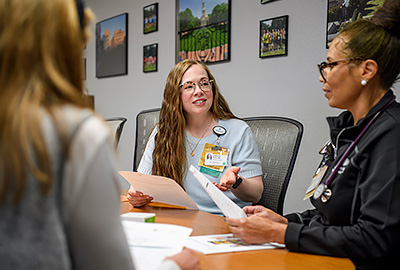
Balancing teaching, patient care, research and national service requires expert-level organization for this wife and mother of two. She praises husband Ryan as a great partner and stresses the importance of “not dropping the glass balls” of life’s most-important priorities, especially when it comes to caring for daughters Evelyn, 8, and Lizzie, 5, and of course her patients.
And then there’s her role as encourager to the medical students she oversees, which she takes very seriously, all the while wishing she could offer similar support to the frightened 17-year-old who sat by her mother’s bedside all those years ago.
“I’d love to tell her to let go of imposter syndrome; I still remind myself of that even now,” Price expressed with a smile. “I’d want young Katie to know, ‘Yes, you really are called to do this big, wonderful thing, and you will have all the tools you need. Give yourself some grace.’”